Italian Food Clipart Digital Paper
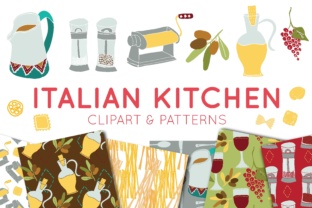
Imagine opening a digital toolkit filled with hand-drawn pasta swirls, rustic espresso cups, sun-ripened olives, and vine-wrapped lemons — all crafted with warmth, intention, and unmistakable Italian charm. That’s what you get with Italian Food Clipart Digital Paper: a thoughtfully assembled set of hand-drawn elements designed not just to decorate, but to connect, communicate, and elevate your creative work.
This isn’t mass-produced clipart. Every element — from the delicate curve of a farfalle to the textured rim of a ceramic cappuccino cup — began as a line on paper. The hand-drawn origin gives the collection authenticity and visual cohesion. No two strokes are identical, yet they harmonize beautifully across formats and uses. That subtle human touch makes designs feel personal, inviting, and grounded — especially valuable in an era saturated with overly polished, algorithm-driven visuals.
What’s Inside — And Why It Matters
The set delivers flexibility without compromise: 1 AI file, 1 EPS file, 27 high-resolution PNGs (300 dpi, transparent background, minimum 10 inches wide), and 10 JPG seamless patterns (also 300 dpi, 12×12 inches, uncut inside clipping masks). Vector files support CS3 and CC versions of Adobe Illustrator, ensuring compatibility whether you’re using legacy software or the latest release.
The 27 individual clipart elements include staples like spaghetti coils, ravioli stacks, basil leaves, wine bottles, lemon wedges, and espresso machines — but also thoughtful details: a cracked eggshell beside a flour-dusted surface, a linen napkin folded beside a fork, or a sprig of rosemary tucked into a jar. These aren’t isolated icons; they’re curated components meant to work together — or stand alone with purpose.
The 10 seamless patterns expand utility significantly. Think olive branch repeats for elegant email headers, polka-dot pasta motifs for printable recipe cards, or soft watercolor-style tomato-and-basil prints for fabric mockups or planner stickers. Because each pattern is delivered uncut inside a clipping mask, editing in Illustrator is intuitive — resize, recolor, or layer without wrestling with boundaries or transparency glitches.
Creative Uses That Go Beyond Decoration
For bloggers and content creators, these elements add narrative texture. A food blogger reviewing regional Italian sauces might overlay a hand-drawn tagliatelle motif behind a headline — reinforcing theme without distracting from the story. An educator building a unit on Mediterranean culture could use the olive and lemon graphics to design interactive flashcards or printable worksheets that feel cohesive and culturally resonant.
Small business owners — especially those in food retail, catering, or artisanal goods — find immediate value. Use the coffee and pastry icons to build Instagram Story templates for daily specials. Layer the seamless patterns into packaging mockups for olive oil labels or handmade pasta boxes. The consistent style helps establish brand recognition fast, even before a full logo system is developed.
Freelance designers appreciate the time saved — and the creative guardrails provided. Instead of sourcing mismatched assets from multiple libraries, they start with a unified visual language. Need a wedding invitation suite with an Italian countryside theme? Combine the vine-patterned background with a hand-drawn “Buon Viaggio” banner and a single olive branch flourish. The result feels intentional, not assembled.
Real Projects, Real Workflow Tips
- Party Invitations: Pair the “Pasta Shapes” PNGs with a clean serif font and off-white background. Use the olive pattern as a subtle border — not too busy, just enough to signal theme.
- Digital Planners & Printables: Drop individual elements (like a tiny espresso cup or garlic clove) into habit trackers or meal-planning pages. Their 300 dpi resolution ensures crisp printing, even at small sizes.
- Social Media Graphics: Build reusable Canva templates using the vector files. Save color-swapped versions of the same pasta icon for different campaign themes — e.g., red for tomato-based dishes, green for pesto-focused posts.
- Educational Handouts: Combine the “Wine Bottle” and “Grape Cluster” elements with short captions about fermentation science — visual anchors that aid memory without oversimplifying.
Keeping It Clear, Consistent, and Audience-Friendly
Clarity starts with restraint. Even with 37 total assets, avoid overcrowding. Choose 2–3 core elements per project and let them breathe. For example, a blog post banner might feature only the coffee cup + steam swirl + one seamless pattern as a background — nothing more. That focus supports readability and reinforces messaging.
Consistency comes from intentional reuse. If you select the “spaghetti coil” as your signature motif for a pasta-making course, use it across slides, handouts, and social previews — always in the same color family and scale relative to text. That repetition builds familiarity, not fatigue.
Audience-friendliness means matching tone to context. A children’s cooking activity sheet benefits from bold outlines and playful sizing of the tomato or basil graphics. A luxury olive oil brand’s website, by contrast, may rely on subtler uses — a faint olive branch watermark behind product copy, or the vector pattern scaled down to 5% opacity as a texture overlay.
Who Benefits Most — And How
Bloggers and content marketers gain ready-made visual shorthand for Italian food topics — speeding up content creation while maintaining aesthetic integrity. Small business owners get affordable, professional-grade assets that help level the playing field against larger competitors. Educators and homeschoolers receive culturally accurate, classroom-ready illustrations that spark curiosity without stereotyping. Hobbyists and crafters find versatile elements for scrapbooking, embroidery transfers, or custom greeting cards — all with print-ready resolution.
Even if you don’t consider yourself “a designer,” this set lowers the barrier to creating something that looks considered and cohesive. You don’t need advanced skills — just clear intent and a willingness to edit thoughtfully. Start simple: open one PNG, place it beside your headline, adjust opacity to 70%, and see how it changes the mood. Then build from there.
Ultimately, Italian Food Clipart Digital Paper works because it respects both craft and function. It doesn’t shout. It invites. And it gives you the raw materials — drawn by hand, built for real use — to make something that feels true to your voice, your audience, and the enduring appeal of Italian food culture.