Cat Made of Paisley Patterns: A Versatile Design Asset for Creative Projects
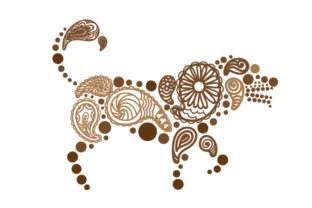
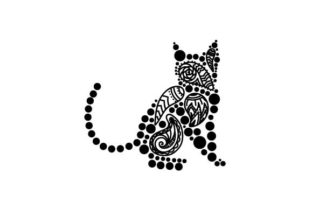
Imagine a feline silhouette—graceful, playful, or quietly enigmatic—woven entirely from swirling teardrops, intricate vines, and ornate floral motifs. That’s the essence of a Cat Made of Paisley Patterns: not just a cat illustration, but a seamless fusion of animal form and textile heritage. This design doesn’t merely depict a cat—it *becomes* paisley, with every curve, paw, and whisker built from the same rhythmic, hypnotic geometry that has adorned shawls since 18th-century India and defined psychedelic posters in the 1960s.
Why This Design Stands Out in Today’s Visual Landscape
In an era saturated with minimalist line art and AI-generated generic icons, a Cat Made of Paisley Patterns offers something rare: intentional complexity with purpose. Its visual richness isn’t decorative clutter—it’s structural storytelling. The paisley motifs aren’t overlaid; they’re the building blocks. Each element flows into the next, guiding the eye along the cat’s spine, curling around its tail, blooming at the tips of its ears. That cohesion makes it unusually adaptable—not despite its detail, but because of it.
Unlike many pattern-based illustrations that risk looking busy or dated, this design balances density with breathing room. Negative space is used thoughtfully—between motifs, within the cat’s arched back, or framing its face—so it never feels overwhelming. That balance is why designers across industries reach for it: it reads clearly at thumbnail size on a website banner, yet rewards close inspection on a large-format print or embroidered textile.
File Formats That Unlock Real-World Flexibility
You’ll receive this design in four production-ready formats: SVG, Transparent PNG, EPS, and DXF. Each serves a distinct role—and knowing when to use which saves time, avoids rework, and preserves quality.
- SVG (Scalable Vector Graphics): Your go-to for digital use. Embed it directly in websites, email templates, or interactive apps. It scales infinitely without pixelation, loads quickly, and supports CSS styling—meaning you can change its color scheme dynamically or animate individual elements (like making the tail sway gently on hover). Ideal for modern web workflows where responsiveness and performance matter.
- Transparent PNG: Perfect when you need instant compatibility—no vector editing software required. Use it in social media posts, PowerPoint decks, Canva projects, or as an overlay on photos. The transparent background means it drops cleanly onto any color or texture. Just remember: this version is raster-based, so avoid enlarging it beyond its original resolution if sharpness is critical.
- EPS (Encapsulated PostScript): The legacy workhorse for professional print. Print shops still rely on EPS for high-resolution output—especially for brochures, packaging, or stationery where color fidelity and crisp edges are non-negotiable. It embeds fonts and preserves vector integrity, making it a safe choice for commercial printers who may not support newer formats like SVG.
- DXF (Drawing Exchange Format): The bridge to physical fabrication. If you’re laser-cutting this design into wood or acrylic, CNC routing it into signage, or etching it onto metal, DXF is essential. It’s universally accepted by machining software and maintains precise paths and layers—so your cat’s delicate paisley whiskers translate accurately to real-world materials.
How Designers Are Using the Cat Made of Paisley Patterns Right Now
This isn’t just a “pretty picture.” Creative professionals are embedding it into tangible, revenue-generating work:
- Apparel & Textiles: Screen printers layer it onto organic cotton tees, using the paisley structure to guide ink bleed—so fine details stay crisp even on textured fabric. Surface designers repeat it as a seamless tile for scarves and wallpaper, adjusting motif scale to suit different end uses.
- Branding & Identity: Boutique pet wellness brands adopt it as a secondary mark—softening clinical messaging with warmth and artistry. One holistic vet clinic used it in their logo’s negative space, subtly reinforcing care, tradition, and attention to detail.
- Home Goods & Packaging: Ceramic studios stamp it onto mugs and coasters, while candle makers emboss it into soy wax lids. Its organic flow translates beautifully to tactile surfaces—especially when paired with matte finishes or debossed textures.
- Digital Products: UI designers incorporate it as a subtle animated loader or as a themed icon set for cat-care apps. Its recognizability at small sizes—thanks to strong silhouette contrast—makes it functional, not just aesthetic.
What to Consider Before Integrating It Into Your Project
Even versatile assets require thoughtful implementation. Here’s what seasoned creatives watch for:
- Color Context: Paisley carries cultural and historical weight—think Persian elegance or 1970s rebellion. Choose palettes intentionally. Deep indigo and rust evoke heritage; mint and peach feel contemporary and approachable. Avoid clashing with brand guidelines unless contrast is part of your strategy.
- Scale Sensitivity: At very small sizes (under 40px), some inner paisley details may blur. Test legibility early—especially if using it as a favicon or app icon. The SVG version gives you the most control here via simplification or selective hiding of sub-elements.
- Background Harmony: While the Transparent PNG handles varied backgrounds well, highly patterned or busy backdrops can compete. Try adding a subtle drop shadow or light stroke to lift the cat visually—without breaking its organic feel.
- Licensing Clarity: Confirm usage rights match your needs. Commercial licenses typically cover merchandising, client work, and SaaS interfaces—but always verify restrictions on resale as standalone digital assets or NFT derivatives.
Pairing Ideas That Elevate the Design
A Cat Made of Paisley Patterns thrives alongside complementary elements—not competing ones. Think texture over noise, rhythm over randomness:
- Pair with hand-drawn typography—especially serif faces with gentle serifs—to echo the craftsmanship embedded in traditional paisley weaving.
- Layer over natural textures: unbleached linen, watercolor washes, or subtle grain overlays. These ground its ornamental quality in authenticity.
- Use sparingly in layouts dominated by clean sans-serifs or geometric shapes. Its presence becomes a deliberate moment of warmth and human touch—not visual noise.
- Avoid pairing it with other dense patterns (like damask or houndstooth) unless one is significantly subdued in scale or saturation.
Looking Ahead: Where This Design Fits in Evolving Trends
Two major creative currents are converging in ways that make the Cat Made of Paisley Patterns especially timely. First, the resurgence of “slow design”—where intentionality, craft, and narrative depth trump speed and automation. Second, the demand for culturally resonant visuals that feel both familiar and fresh. Paisley sits at that intersection: globally recognized, deeply rooted, yet endlessly reinterpret-able.
We’re seeing it evolve beyond static use—animated in micro-interactions, translated into generative art algorithms, even rendered in AR as interactive 3D sculptures that bloom and unfurl. Its modular structure lends itself naturally to these experiments. And because it’s delivered in multiple formats—including DXF for physical prototyping and SVG for web integration—it’s ready for whatever comes next, not just what’s current.
Whether you're launching a boutique pet brand, designing a limited-edition textile collection, or building a calming meditation app with feline themes, this design does more than fill space. It brings texture, history, and quiet sophistication—without saying a word. And in a world hungry for meaning behind the visual, that’s not just practical. It’s essential.