Pumpkin Made of Paisley Patterns: A Distinctive Design Choice for Seasonal and Decorative Projects
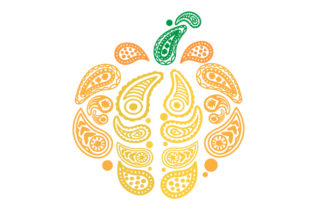
A Pumpkin Made of Paisley Patterns is not a physical object or a culinary variation—it’s a stylized graphic design that merges the iconic autumnal shape of a pumpkin with the intricate, swirling motifs of paisley. This fusion creates a visually rich, culturally layered image: the organic curves and ridges of a pumpkin are reinterpreted through the ornate, teardrop-shaped flourishes characteristic of traditional paisley textile art. The result is a design that balances seasonal familiarity with decorative sophistication—ideal for digital crafters, print designers, event planners, and educators seeking thematic yet distinctive visual assets.
What Sets Pumpkin Made of Paisley Patterns Apart
Unlike standard pumpkin clipart—often simplified, cartoonish, or photorealistic—a Pumpkin Made of Paisley Patterns prioritizes pattern language over literal representation. Its defining trait is structural integration: the pumpkin’s form isn’t merely overlaid with paisley; instead, its surface is constructed *from* paisley elements—each ridge, lobe, and contour composed of interlocking or mirrored paisley motifs. This approach yields a design that reads clearly as a pumpkin at a glance but rewards closer inspection with rhythmic detail and cultural resonance.
The inclusion of multiple file formats—SVG, transparent PNG, EPS, and DXF—reflects its functional versatility. SVG ensures crisp scaling for web use and responsive layouts; the transparent PNG supports immediate layering in presentations or social media graphics; EPS maintains vector fidelity for professional print workflows; and DXF enables direct import into CNC machines, laser cutters, or embroidery software. That breadth signals intentionality: this isn’t just an illustration—it’s a production-ready asset designed for cross-platform application.
How It Compares to Other Pumpkin-Themed Graphics
When evaluating seasonal design resources, users often encounter three broad categories: generic pumpkin icons, hand-drawn or watercolor-style pumpkins, and pattern-based variations (like geometric, floral, or tribal pumpkins). A Pumpkin Made of Paisley Patterns occupies a nuanced middle ground—more structured than expressive brushwork, more culturally evocative than minimalist icons, and more cohesive than patchwork pattern overlays.
For example, a watercolor pumpkin may convey warmth and artisanal charm but lacks precision for technical applications like vinyl cutting or embroidery digitizing. In contrast, the clean vector paths of a Pumpkin Made of Paisley Patterns support accurate toolpath generation without manual cleanup. Similarly, while a geometric pumpkin (e.g., low-poly or tessellated) emphasizes modernity and abstraction, it often sacrifices recognizability or tactile richness. Paisley, by comparison, introduces organic flow and historical texture—making the design feel both intentional and inviting.
It also differs meaningfully from “pumpkin + pattern” composites—where a solid pumpkin shape is filled with a repeating paisley tile. Those designs risk visual flatness or motif repetition that distracts from the pumpkin’s silhouette. A true Pumpkin Made of Paisley Patterns avoids that pitfall by embedding pattern logic *into* the shape’s architecture—so the design holds up whether scaled to a business card or a 48-inch wall decal.
Strengths and Practical Tradeoffs
The primary strength lies in its dual-purpose clarity: it communicates “pumpkin” unambiguously while carrying the visual weight and stylistic nuance of paisley. That makes it especially effective for projects where tone matters—think boutique Halloween branding, multicultural fall festivals, or textile-inspired stationery. Educators have used it to spark discussions about pattern history, cultural borrowing in design, or symmetry in nature and ornament.
However, it’s not universally optimal. Because of its detail density, very small-scale applications—such as favicon-sized icons or fine-thread embroidery under 1.5 inches—may lose legibility. In those cases, a simplified outline version or a bolder silhouette might serve better. Likewise, users seeking strictly rustic, farmhouse, or vintage Americana aesthetics may find the paisley reference too ornate or globally associative rather than regionally grounded.
Color flexibility is another practical consideration. While the design works across palettes—from burnt orange and deep indigo to monochrome or metallic tones—the intricacy means color separation requires attention in print prep. For spot-color printing (e.g., screen-printed t-shirts), a two- or three-color version may need manual adjustment, whereas a basic pumpkin outline would simplify that process.
Best-Fit Use Cases and Decision Factors
A Pumpkin Made of Paisley Patterns shines when the goal is to elevate seasonal content without sacrificing clarity. Consider these real-world examples:
- Custom apparel and accessories: Screen-printed on tote bags or embroidered onto scarves, the design translates well to fabric—especially when paired with complementary paisley borders or coordinating motifs.
- Digital marketing assets: Used as a hero graphic in email headers or landing pages for autumn-themed product launches, it stands out amid stock-image fatigue while remaining thematically appropriate.
- Educational and craft materials: Teachers use the SVG version to demonstrate vector editing concepts; makers adapt the DXF for laser-cut wooden ornaments or layered acrylic signs.
- Themed event decor: When designing invitations, signage, or table runners for events blending harvest traditions with global design sensibilities (e.g., a “World Harvest Festival”), the pattern bridges cultural references gracefully.
Deciding whether this design suits your needs depends on several factors: your audience’s visual literacy, the medium’s resolution constraints, your brand’s stylistic consistency, and whether pattern depth adds value—or complexity—to your message. If you’re aiming for broad accessibility (e.g., public signage for all ages), simplicity may trump ornamentation. But if your project benefits from layered meaning, tactile suggestion, or stylistic distinction, the paisley pumpkin offers a rare balance of recognition and refinement.
When Another Option May Be More Appropriate
There are valid reasons to choose alternatives. If your workflow relies heavily on raster-only tools (e.g., certain photo editors without vector support), the EPS or SVG files may require conversion steps that introduce inconsistencies. In such cases, a high-resolution PNG variant of a simpler pumpkin design could reduce friction.
Similarly, if your project calls for strict adherence to a specific aesthetic system—say, Scandinavian minimalism or mid-century modern line art—a Pumpkin Made of Paisley Patterns may feel tonally dissonant. Its ornamental heritage leans toward maximalist, textile-influenced, or globally inspired contexts—not austerity or retro-futurism.
Finally, budget and licensing matter. While many paisley-influenced pumpkin illustrations are available royalty-free, verifying usage rights for commercial redistribution (e.g., selling physical products featuring the design) is essential. Some platforms bundle extended licenses with vector packs; others require separate negotiation. Always review terms before committing to production timelines.
Making an Informed Choice
Selecting a Pumpkin Made of Paisley Patterns isn’t about choosing the most elaborate option—it’s about matching design intelligence to functional need. Its value emerges when pattern, form, and context align: when the swirl of paisley echoes the curl of a vine, when the rhythm of repeated motifs supports rather than competes with the pumpkin’s shape, and when the file formats enable execution across your intended mediums.
Before downloading or purchasing, test the SVG at multiple sizes in your target environment. Import the DXF into your CNC software to verify path continuity. Overlay the transparent PNG on a mockup of your final background. These small steps reveal how the design behaves—not just how it looks.
Ultimately, a Pumpkin Made of Paisley Patterns represents a thoughtful convergence: seasonal symbolism meets enduring decorative language, delivered in formats that respect both creative intent and technical reality. Whether it’s the right choice depends less on trendiness and more on whether its particular blend of clarity, culture, and craftsmanship serves your specific purpose—now and in iterations to come.