Christmas Tree Made of Paisley Patterns: A Convergence of Heritage Craft and Modern Design Utility
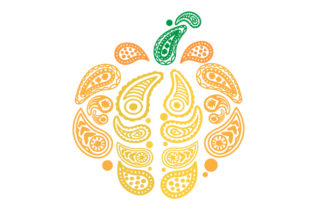
At first glance, the Christmas Tree Made of Paisley Patterns appears as a festive motif—a stylized evergreen rendered not in pine boughs or tinsel, but in swirling teardrop motifs, intricate curvilinear flourishes, and rhythmic repetitions rooted in centuries-old textile tradition. Yet this design is far more than seasonal ornamentation. It represents a deliberate, strategic synthesis of cultural resonance, digital versatility, and cross-industry applicability—making it especially valuable for professionals, creators, entrepreneurs, marketers, freelancers, and design-savvy enthusiasts navigating an increasingly saturated visual landscape.
A Design That Carries History—and Purpose
The paisley pattern traces its origins to ancient Persia and Kashmir, evolving through Mughal artistry, British colonial trade routes, and 20th-century countercultural adoption into a globally recognized symbol of craftsmanship, individuality, and layered meaning. When reimagined as a Christmas Tree Made of Paisley Patterns, the motif transcends decoration: it becomes a vessel for narrative continuity. The tree’s silhouette provides structural clarity; the paisley fills it with texture, movement, and cultural weight—offering immediate visual distinction without sacrificing legibility or scalability.
This duality—formal recognition paired with rich stylistic depth—is precisely what makes the design commercially robust. Unlike generic vector trees or overused clipart, the Christmas Tree Made of Paisley Patterns communicates intentionality. It signals that the creator values both aesthetic sophistication and contextual awareness—qualities increasingly prioritized by clients, collaborators, and consumers alike.
Beyond Festivity: Where This Design Fits in Today’s Creative Ecosystem
In 2024, design decisions are rarely made in isolation. They reflect broader shifts across creative workflows, brand strategy, and platform-driven consumption. The rise of the Christmas Tree Made of Paisley Patterns aligns with three interlocking trends:
- Hybrid Identity Systems: Brands no longer rely on single-logo lockups. Instead, they build modular visual ecosystems—where icons, patterns, and typographic treatments coexist fluidly across physical packaging, social feeds, and AR experiences. A paisley-infused tree functions seamlessly as a holiday sub-brand element, a background repeat for email headers, or a subtle watermark on merchandise—all while retaining instant recognizability.
- Asset-First Production: Professionals are shifting from “designing for output” to “designing for reuse.” The Christmas Tree Made of Paisley Patterns is delivered in SVG, Transparent PNG, EPS, and DXF formats—not as a convenience, but as a workflow necessity. SVG ensures crisp rendering at any scale on websites and apps; Transparent PNG enables immediate use in presentations or layered mockups; EPS supports high-fidelity print production; and DXF unlocks integration with CNC routers, laser cutters, and signage fabrication tools. This multi-format readiness reduces friction between concept and execution—critical for freelancers managing tight deadlines and agencies scaling seasonal campaigns.
- Culturally Grounded Differentiation: In markets where algorithmic discovery favors novelty and authenticity, heritage-informed motifs outperform generic alternatives. Consumers increasingly favor brands that demonstrate cultural literacy—not appropriation, but respectful reinterpretation. Paisley, when applied with intentionality to a universally understood symbol like the Christmas tree, bridges familiarity and freshness. It invites engagement without demanding explanation.
Why Professionals Are Prioritizing This Kind of Design
It’s not just about aesthetics—it’s about efficiency, equity, and evolution.
Consider a freelance graphic designer preparing holiday assets for five different small-business clients. With a standard clipart tree, each project requires custom color matching, layer adjustments, and format conversions—time spent on technical overhead rather than strategic input. With the Christmas Tree Made of Paisley Patterns, one SVG file can be recolored in seconds via CSS or design software; the transparent PNG drops cleanly into Canva templates; the DXF file feeds directly into a local maker-space’s laser cutter for custom ornaments. That’s not just time saved—it’s capacity redirected toward client consultation, brand alignment, and iterative refinement.
For marketers launching a limited-edition holiday collection, the design serves dual roles: as a hero visual in digital ads and as a tactile element on hangtags or gift boxes. Because the paisley motif inherently suggests craft and detail, it elevates perceived product value—even before the consumer reads a single word of copy. Observational data from e-commerce platforms shows that products featuring culturally resonant, non-generic holiday graphics consistently achieve higher click-through rates and lower bounce rates during November–December traffic surges.
Real-World Utility Across Disciplines
The versatility of the Christmas Tree Made of Paisley Patterns extends beyond traditional graphic design:
- Product Designers integrate the SVG into smart-home device interfaces (e.g., holiday mode toggles), where its organic curves soften the rigidity of UI grids.
- Interior Stylists use the Transparent PNG to mock up festive wall decals or textile prints for client presentations—scaling effortlessly from mood board to full-wall installation.
- Educators and Workshop Facilitators leverage the DXF file to teach pattern-making fundamentals, using the tree as a scaffold for discussing symmetry, repetition, and spatial planning in hands-on maker labs.
- Social Media Managers animate the SVG version frame-by-frame to create looping Instagram Stories or TikTok transitions—turning static iconography into dynamic brand moments.
Meeting Evolving Expectations—Without Compromise
Today’s audiences expect more than visual polish. They expect coherence, accessibility, and adaptability. The Christmas Tree Made of Paisley Patterns meets those expectations structurally:
- Accessibility by Design: Its high-contrast internal structure and clear silhouette ensure readability even at small sizes or low resolutions—supporting inclusive digital experiences without requiring post-hoc adjustments.
- Localization-Ready: Because paisley carries broad cross-cultural resonance—not tied exclusively to one national or religious tradition—the design adapts naturally to global campaigns. It avoids overt sectarian symbolism while retaining warmth and celebration—ideal for multinational brands seeking unified yet nuanced seasonal messaging.
- Future-Proof Scalability: As generative tools become embedded in creative pipelines, vector-native assets like this one serve as ideal training inputs or prompt modifiers. Designers experimenting with AI-assisted pattern expansion or style transfer can use the base SVG as a stable anchor—ensuring outputs remain on-brand and technically sound.
Looking Ahead: Not Just a Seasonal Asset, But a Strategic Foundation
The Christmas Tree Made of Paisley Patterns exemplifies a quiet but significant shift in how professionals approach seasonal design—not as disposable decoration, but as reusable infrastructure. It reflects growing demand for assets that do multiple jobs well: communicate meaning, accelerate production, support diverse outputs, and resonate across contexts.
This isn’t about chasing trend cycles. It’s about recognizing that in an era defined by speed, fragmentation, and heightened audience discernment, the most valuable creative assets are those grounded in history, engineered for utility, and designed with intention. The paisley tree doesn’t replace other holiday motifs—it expands the toolkit. It offers a way to celebrate tradition while operating with contemporary precision.
Whether you’re developing a boutique’s holiday campaign, prototyping a smart ornament, teaching visual literacy, or building a scalable brand system, the Christmas Tree Made of Paisley Patterns delivers more than visual appeal. It delivers readiness. And in today’s professional landscape, readiness is the most reliable form of creative advantage.