Mermaid Made of Paisley Patterns
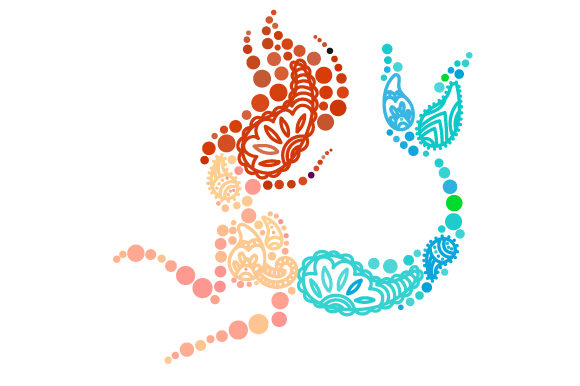
If you’ve ever seen a design that feels both whimsical and intricately detailed—like a mythical sea creature woven from swirling, hypnotic motifs—you’ve likely encountered a Mermaid Made of Paisley Patterns. This isn’t just a mermaid illustration with a paisley border or background. It’s a seamless fusion: the curves of a mermaid’s tail, hair, and silhouette are *constructed entirely* from classic paisley shapes—teardrops, scrolls, and ornamental flourishes—arranged with rhythm and intention. The result is a single cohesive image where folklore meets textile tradition.
Why This Design Stands Out
Unlike generic clipart or stock illustrations, a Mermaid Made of Paisley Patterns carries layered visual meaning. Paisley has roots in Persian and Indian art, symbolizing life, eternity, and growth—ideas that resonate naturally with mermaid lore, which often embodies mystery, transformation, and deep connection to nature. When combined, they create something more than decorative: it’s evocative, culturally rich, and quietly sophisticated.
The design works because it balances contrast and harmony. Soft, flowing lines meet precise, repeatable motifs. Fantasy meets craft. That duality makes it equally at home on a handmade greeting card and a boutique clothing label—or even as a subtle watermark in an educator’s presentation about pattern history.
Real Uses—From Simple to Strategic
You don’t need to be a graphic designer to get value from this artwork. Here’s how people actually use it:
- Small business owners print it on eco-friendly tote bags or ceramic mugs for coastal-themed gift shops—customers love the blend of ocean magic and artisanal detail.
- Educators and librarians incorporate it into storytime displays or lesson plans about cultural symbols, using the paisley motif to spark conversations about global design traditions.
- Freelance designers and bloggers layer the transparent PNG over soft pastel backgrounds for Instagram posts, newsletters, or printable wall art—no extra editing needed thanks to the clean transparency.
- Hobbyists and crafters import the SVG file into Cricut or Silhouette software to cut intricate vinyl decals for journals, phone cases, or custom notebooks.
- Marketing teams adapt the EPS version for high-resolution brochures or event signage—especially for wellness retreats, book launches, or indie fashion pop-ups where storytelling and aesthetic cohesion matter.
What You’ll Receive—and Why Format Matters
You’ll get this design in four versatile formats: SVG, Transparent PNG, EPS, and DXF. Each serves a distinct purpose—and knowing when to use which saves time and avoids frustration.
The SVG file scales infinitely without losing quality, making it perfect for websites, digital presentations, or responsive email templates. It loads quickly and works natively in modern browsers.
The Transparent PNG is your go-to for quick drag-and-drop use—ideal for Canva, social media banners, or overlaying onto photos in Lightroom or Photoshop. No white box, no clipping masks required.
The EPS format is industry-standard for professional print workflows. If you’re sending files to a local printer for business cards or fabric swatches, EPS ensures crisp output—even at large sizes.
The DXF file bridges digital and physical creation. Laser cutters, CNC machines, and certain embroidery software read DXF natively—so if you're etching glass, engraving wood, or digitizing for machine embroidery, this is your starting point.
Things to Keep in Mind Before You Use It
This design shines brightest when its inherent qualities aren’t overwritten. Avoid stretching it unevenly or adding heavy filters that blur the delicate paisley edges—those details are part of what makes it special.
Also consider color context. Paisley patterns carry strong visual weight, so pairing the mermaid with busy backgrounds or clashing hues can dilute its impact. Try placing it against muted tones (oatmeal, slate blue, warm taupe) or clean white space to let the intricacy breathe.
If you plan to use it commercially—say, on merchandise you intend to sell—check your license terms. Most versions include broad commercial rights, but always verify whether attribution is requested or usage limits apply (e.g., quantity caps for physical products).
And while the design is beginner-friendly, getting the most out of it helps to understand basic vector concepts—like grouping, ungrouping, and adjusting stroke vs. fill. Free tutorials for Inkscape or Affinity Designer cover these in under ten minutes. No need to master everything at once—start with one format and one use case.
A Design That Grows With You
One of the quiet strengths of a Mermaid Made of Paisley Patterns is its flexibility across skill levels and goals. A student designing their first zine can drop in the PNG and call it done. A branding consultant building a full identity system might deconstruct the SVG to extract individual paisley elements and rebuild them into custom icons or borders. A teacher might project the EPS file during class and trace it by hand with students to explore symmetry and repetition.
It’s also adaptable across mediums—not just digital or print, but tactile ones too. Think heat-transfer vinyl for t-shirts, sublimation printing for throw pillows, or even hand-painted interpretations on pottery. The underlying structure gives creators room to interpret, reinterpret, and personalize—without losing the soul of the original concept.
Ultimately, this isn’t just another download. It’s a visual bridge between imagination and execution—between ancient pattern language and contemporary storytelling. Whether you’re launching a side hustle, decorating your workspace, illustrating a personal project, or simply collecting beautiful, meaningful assets, a Mermaid Made of Paisley Patterns offers both instant usability and long-term creative potential.